Launching The Collection: An All-New Feature for MCL26
We’ve joined forces with the fantastic Moulsdale Foundation, and industry-leading Classic Bike Magazine, to bring an all-new feature to MCL26. ‘The Collection’ is a hand-picked selection of 12 incredible bikes, all coming to the NEC this November.
Based on the outskirts of Glasgow, The Moulsdale Foundation is a charitable foundation that houses over 700 specialist motorcycles and cars, making it Scotland’s largest collection. Open to the public once a month in order to raise funds, and lesser known outside Scotland, The Foundation has given MCL exclusive access to some of its hugely eclectic engine-powered exhibition.
We caught up with Classic Bike Editor, Mike Armitage, who has the enviable job of selecting his top pick from this massive collection of historic metal and, in his words, he explains why he’s chosen these bikes to be at MCL26.
Moto Guzzi Le Mans 850 (Mark 1)
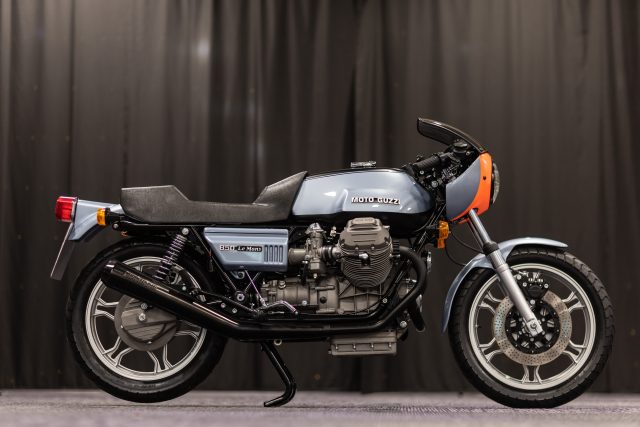
“The Moto Guzzi Le Mans 850 – what later became known as the Mark 1. It’s the defining 1970s superbike. Fast, solid handling, but also reliable; the sort of bike where you could sling a tent on the back and romp down to the Bol d’Or and it’d just be absolutely perfect. This one has lived in a cocoon basically, and has done six miles from new. It is showroom fresh, unrestored, completely as it left the factory, and just achingly beautiful.”
Suzuki RG500
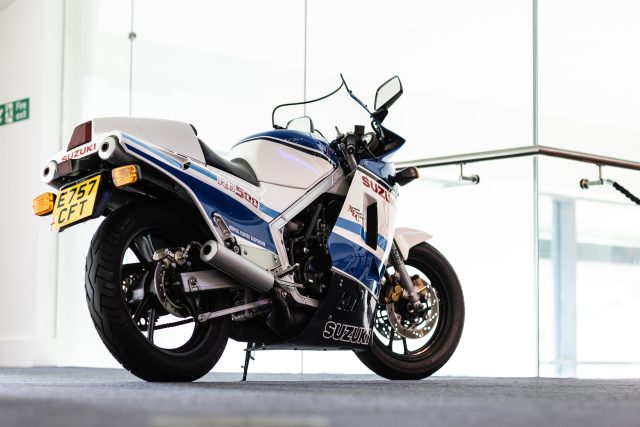
“This is the go-to mid-’80s GP-replica two stroke. There was the Honda NS400R, built to echo their NSRs, and there was the Yamaha RD500 which, arguably, was perhaps a better bike than the Suzuki. But the Suzuki is the one that made us look and feel like we were riding a GP bike. It was the poster machine for a generation – rumour at the time was that Suzuki tweaked all the press bikes by blueprinting the engines, as they howled to 150mph in magazine tests. It made the flighty, zinging, engaging RG the stuff of legend. And look at those pipes…”
Bimota V Due
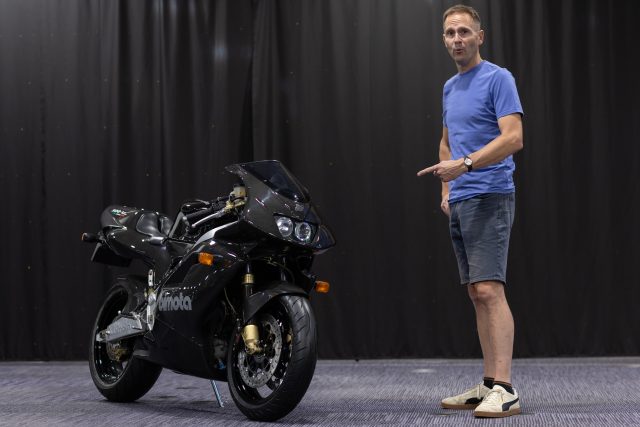
“This was the bike that was going to save Bimota, but was actually the bike that almost killed Bimota. There were problems with the injection and build quality. Later bikes were sold with a carb conversion, which pretty much fixed them, but by then the damage was done. Yet while Bimota’s own 500cc GP bike never completed a race, this is arguably as close as you can get to a road-legal 500 two-stroke racer. With its exquisite chassis and bespoke engine – and that name on the side – it’s such a special thing. The example here has bare carbon bodywork, plus Jolly Moto expansion chamber pipes that get rid of the slightly odd-looking originals. It’s not registered, it’s never been run; it’s a late, sorted, mint bike, and if I could get it in my rucksack, it would be coming home with me.”
Mondial Piega
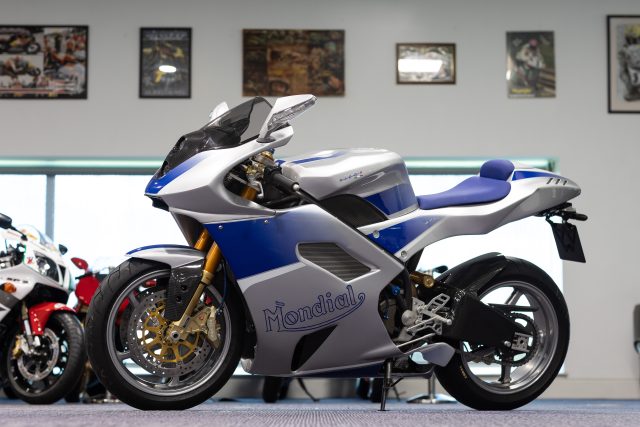
“Mondial is a historic Italian manufacturer, who had loads of race success back in the day. The Piega was like their last roll of the dice. Built with a Honda SP-1 engine in a bespoke chassis, it boasts top-line Paioli suspension, Brembo brakes, exquisite bespoke machined rearsets, a carbon fibre swingarm – and I could go on, and on. They barely sold any, and they’re super rare. Sizeable and rock-hard stiff, you might argue it’s not as good dynamically as the Honda it borrowed the engine from. But that’s missing the point.”
Foggy Petronas FP1
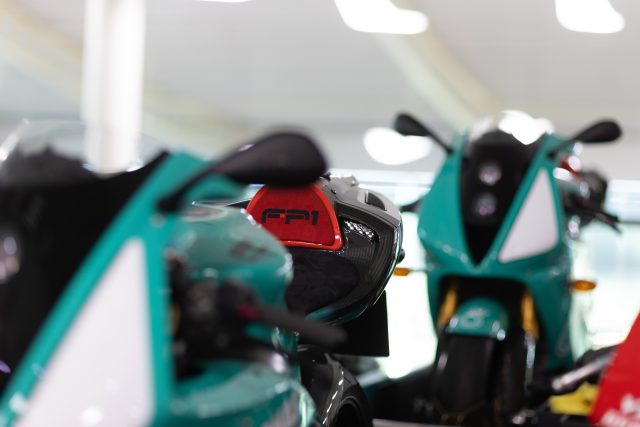
“They’ve got two Foggy Petronas FP1s here. One is in the crate it was supplied in, with the original folder full of all the literature that came with the bike. I’ve picked the FP1 partly because of the legend – the stories of them not building enough to homologate it for World Superbike and only having about half the quantity they should have had. But the other reason I’ve picked it is that the FP1 is actually a special device. It didn’t do what it was supposed to in racing, the road version wasn’t a hit, but this is a bike originally conceived for MotoGP by big hitters – and so there’s nothing quite like it. If you went to your local bike meet and there was a Fireblade, R1, GSX-R750 and an FP1, and someone said, “You can have the keys, which one are you going to ride?”, we’d all take the FP1. The three-cylinder engine, the under-seat pipe, the sense that it’s something rare and different.”
Ducati Mike Hailwood Mille Replica
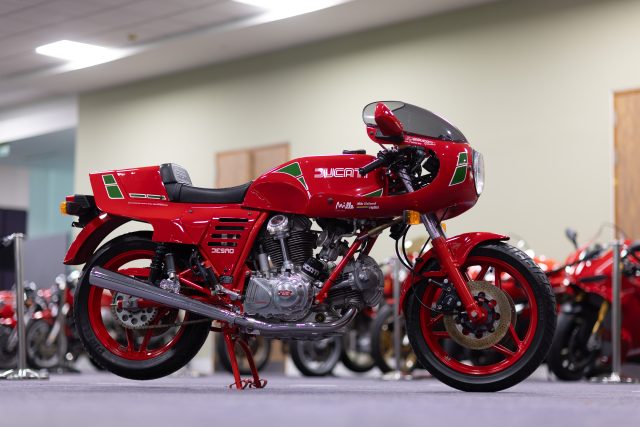
“This isn’t the official Ducati Hailwood replica – it’s one of 25 bikes built by Ducati Classic Limited, paying homage to and with the blessing of Fabio Taglioni, the famous Ducati designer. Rare and bespoke, this example has only done 8km, so basically it’s never been used. You could spend hours soaking in the details and revelling in its beauty.”
Ducati 851SP
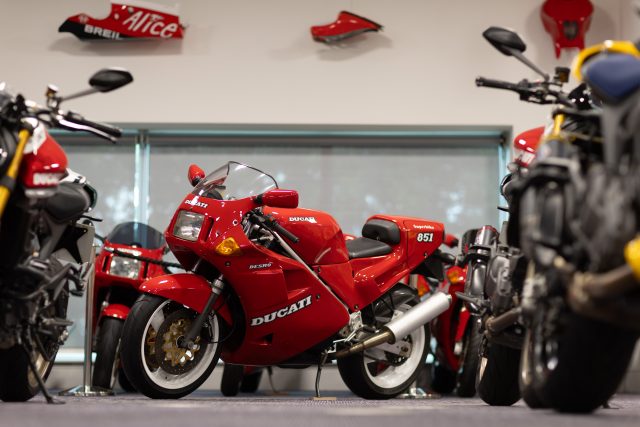
“This is an early Ducati 851, a 1987 model, though wasn’t registered until ’89. It’s also an early SP version, which makes it even more desirable. A glorious thing with only 217km on the clock, this is number 96 of the SPs of the limited quantity of SPs that Ducati made. This is the model that brought Ducati back up to dates and reinstalled them as a force in racing – those early World Superbike were all about the battles between the Honda RC30 and the Ducati 851. It’s the bike that put them on the road to racing dominance but also that set the template for their future – with advanced engine management plus the trellis frame and water-cooled V-twin with four-valve heads, it was the blueprint for Ducati sports bikes right through the 916 and right up to the last 1299s. With simple lines and colours, it’s got an elegance that’s lacking on modern motorcycles.”
Ducati 916 Foggy Replica
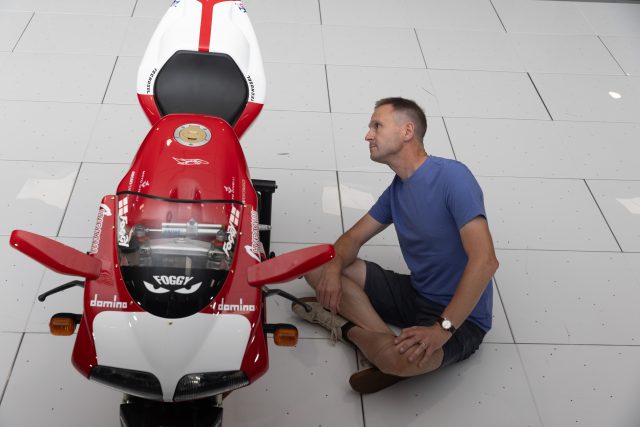
“Created by Moto Cinelli, who were the Ducati UK importers at the time, the Ducati 916 Foggy Replica is a full-on race rep. Based on the blingy SPS, it has fancy pipes, fancy paint, the whole nine yards. There have been several special 916s – but for British fans of WSB, this is surely the one to lust over.”
Honda MBX80
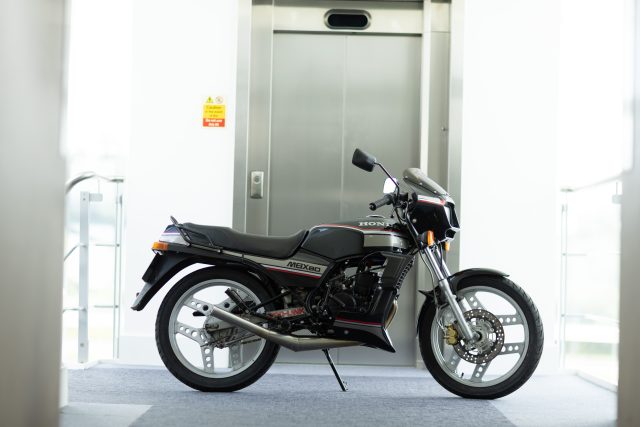
“Might seem an odd choice because it’s not an iconic small bike. But the MBX50 stands out – it had Comstar wheels like the big Hondas, a liquid-cooled engine, Pro-Link monoshock rear suspension, plus a disc brake with twin-pot sliding caliper. Ooh, and a little headlight fairing. It was like having superbike bling on a tiddler. Based on the MBX50, the 80cc version also coincided with new 12bhp laws for learners on 125s and offered similar performance with lower running costs. I haven’t seen one for 40 years. And the best bit is that in a museum full of super-low-mileage bikes, this little MBX80 has done 61,948 miles. It’s a proper trip down memory lane and demonstrates how the rapid development that swept through motorcycling in the ’80s filtered right down to the little tiddlers. Cracking thing.”
Kawasaki AR50
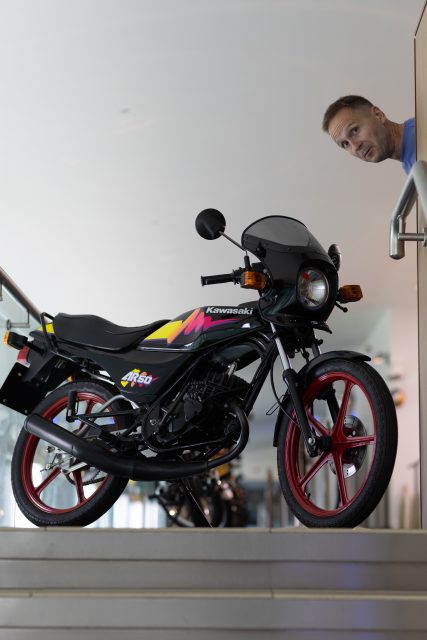
“For a generation of riders through the ’80s and into the mid-’90s, if you were 16 and wanted to go fast you bought a Kawasaki AR50. Why? Because you could put an 80cc engine in to get the six-speed bottom end, install a 93cc big-bore kit, and have a moped that did 70mph – and your parents would be none the wiser. I’ve picked this one particularly because it’s got the GPZ styling from the early ’80s, which Kawasaki used to make their little bike look like a big bike, but it’s a late model with fabulously gaudy 1990s graphics – so it’s a fabulous clash of eras.”
Kawasaki GPZ750 Turbo
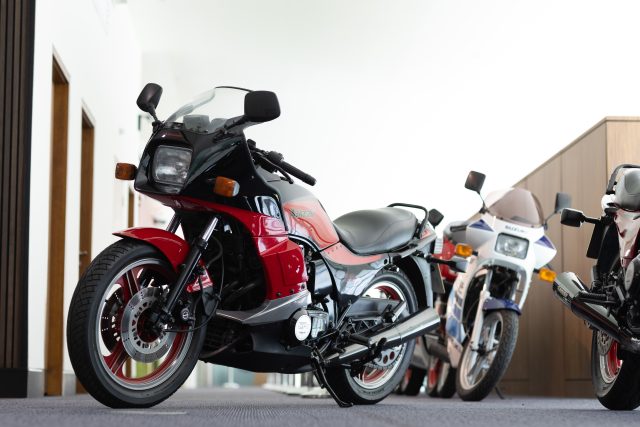
“In the early 1980s all the big Japanese manufacturers tried to be the ones who made forced induction work on a motorcycle. The GPZ was the last to appear – but is the one that worked best. With a fuel-injected engine, turbo, the iconic GPZ silhouette, brilliant Battle Star Galactica-style LED lights and a boost gauge above the tacho, it’s as 1980s as you can possibly get.”
Suzuki GT750
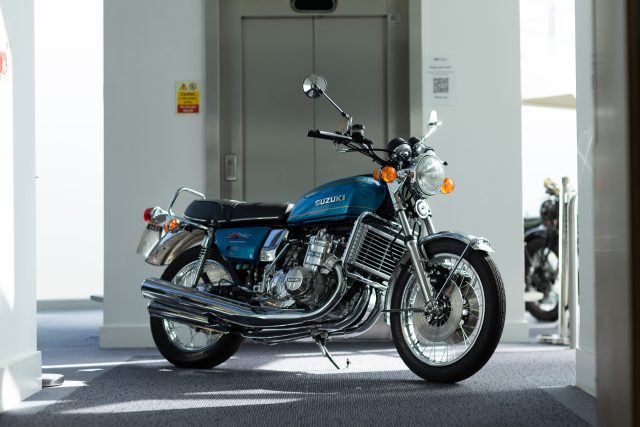
“The GT750 was the first liquid-cooled multi-cylinder Japanese motorcycle. Kawasaki’s two-stroke triples were all about performance and famed for being a bit hairy, but the Suzuki is something different. Yes, it’s a stroker, but the red line is at 7000rpm and the delivery is all about torque. With a chassis designed for comfort, the GT is a big, practical, use-every-day classic unlike anything else. It also looks great, with the entirely polished engine and metallic blue paint – and this restored example is better than new. A glorious slice of 1970s excess that’s actually a really practical motorbike.”
Want to find out more about each of the bikes?
Mike will be exploring each bike in greater detail in Classic Bike, and you can see the bikes up close and personal at MCL26. If you do want to find out more about the finer points of these twelve awesome machines, plus loads more exciting features about bikes from days gone by, why not subscribe and never miss an issue? Visit https://www.greatmagazines.co.uk/classic-bike-magazine for the latest Classic Bike subscription deals.
Pictures shot by the brilliant Chippy Wood.